
We run Learn from the World. It is a non-profit project documenting democratic reforms that did not survive, aimed at people between thirteen and thirty-five who want to change something where they live. The premise is that young people are handed inspiring examples from elsewhere and almost never told what those examples rested on, or what happened when someone tried to copy them.
Who we areWe are Elena and Kai. We live between Germany, Italy and Estonia, which is a complicated way of saying we are European. We started this because we think the wrong stories get told about how things change, and because the people who will be making those changes in twenty years are being handed the wrong ones now.
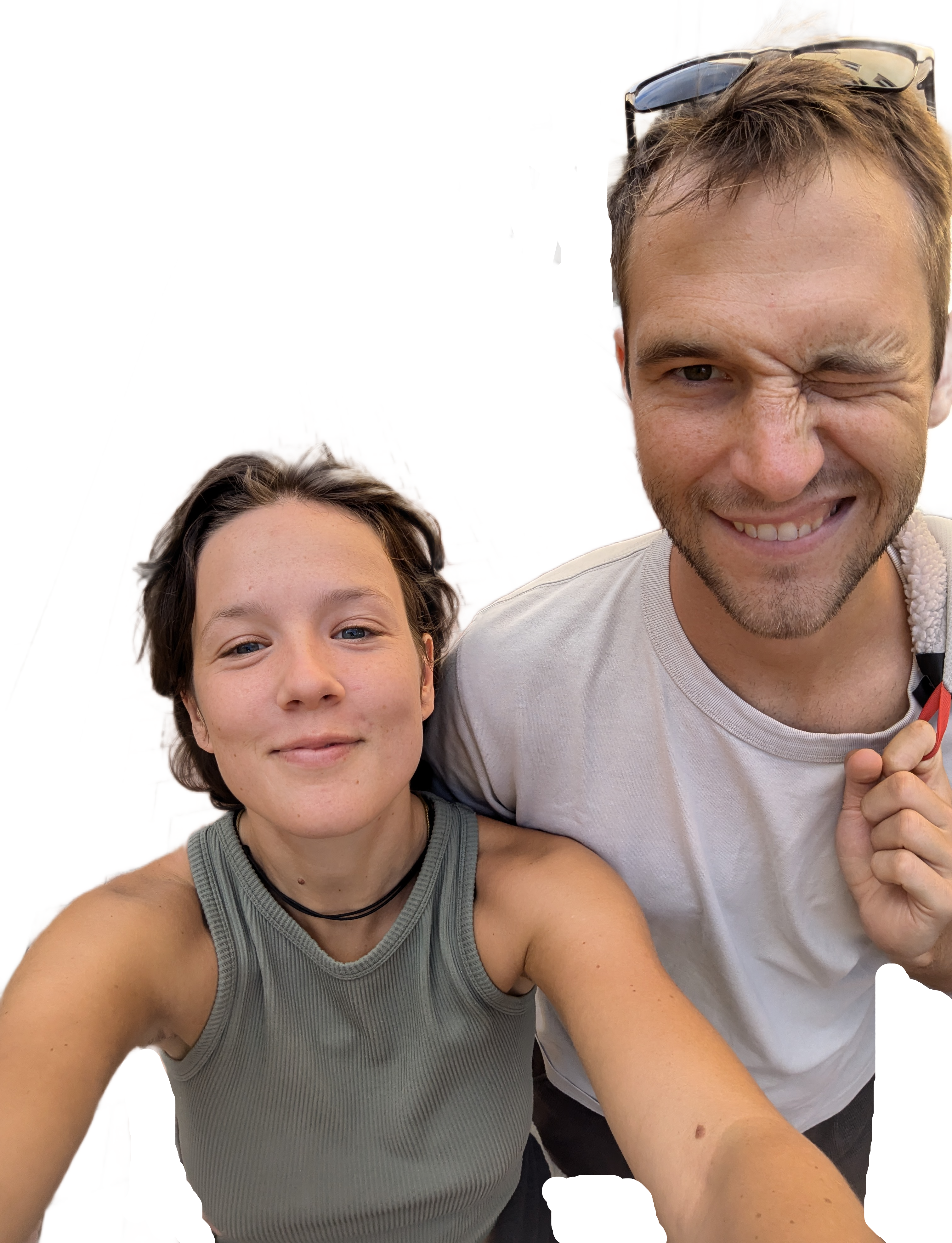

Kai: This project began with a frustration. In European leadership programmes, I kept sitting in rooms with exceptionally intelligent, well-educated, privileged people tasked with proposing how things should change - and what came out was almost always the same. Another regulation. Another platform. Another working group.
Nothing wrong with any of it. Nothing surprising either. Very little that was genuinely imaginative, and almost nothing that reckoned with why previous versions of the same idea had already failed somewhere else.
I had run into the same pattern before, in a completely different field. My bachelor's thesis was on startup failure, and the finding was the same one: everybody tells the story of the ones that worked, almost nobody examines the ones that didn't, and so the same mistakes get made again by people who had every opportunity to know better.
Learn from the World is an attempt at the opposite: start from what has actually been tried, take its failures seriously, and put the next generation in direct contact with the people who lived through them.
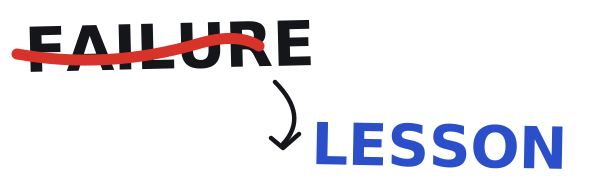
Our visual language borrows from Jean-Michel Basquiat, and not for decoration.
Basquiat had a habit that looks like a mistake and is the opposite of one: he crossed words out. Not to remove them, but because striking a word through makes people look at it harder. The correction stays visible. The working-out is left on the canvas.
That is exactly what we are trying to do with failure. Most organisations in this field present the finished version - the reform that worked, the city that got it right, the elegant final answer. The false starts get quietly edited out. We think the false starts are the most useful part, and we would rather leave them on the page than tidy them away.
The crown is his too. Basquiat put crowns on people history had overlooked, insisting they mattered. Ours sits on a globe, because the assumption we are working against is that the interesting ideas come from a small handful of familiar places. They do not. Some of the best ones come from a district council you have never heard of, in a country nobody benchmarks against.
And the colour is deliberate. Studying what went wrong could easily become a grim exercise. It is not one. Every failure documented here is somebody's genuine attempt to make a place better, and the point of examining it closely is that the next attempt goes further. That is an optimistic act, and we wanted it to look like one.
If you have attempted a reform that did not go as planned, if you are researching how policy travels, or if you are young and trying to build something where you live: we would like to hear from you.
Get in touch